

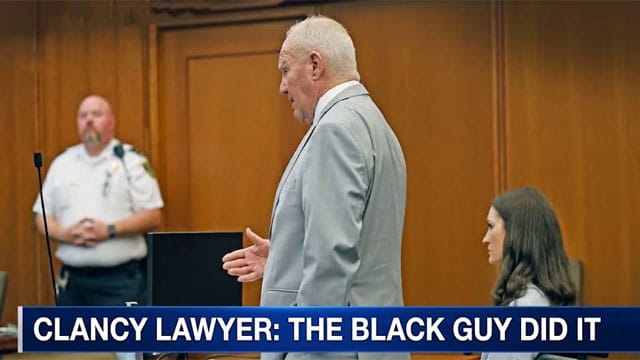
PLYMOUTH, MASSACHUSETTS — In a dramatic shift in legal strategy following a mistrial in the high-profile murder case, defense attorney Kevin Reddington reportedly raised a startling new question Tuesday regarding the deaths of Lindsay Clancy’s three children, asking why everyone had spent the past three years assuming Clancy was responsible when a Black holdout juror had been sitting right there all along.
Reddington, who previously centered Clancy’s defense around the argument that she had been suffering from postpartum psychosis and was not criminally responsible for the deaths, dramatically shifted strategies during Tuesday’s hearing by questioning whether prosecutors had presented sufficient evidence that Clancy killed the children in the first place and not the Black Catholic man on the jury.
“Everyone keeps asking whether Lindsay was criminally responsible for killing her children,” Reddington said. “But I think we need to take a step back and ask a much more important question: Why was nobody looking at the Black guy on the jury? I’m not saying he definitely did it. I’m simply asking why everyone immediately assumed it was Lindsay when this Black man was literally right there.”
When informed that the holdout juror, Michael Desronvil, was in an entirely different city at the time of the killings and only encountered the case when summoned for jury duty, Reddington remained undeterred.
“That’s exactly what someone trying to establish an airtight alibi would do,” Reddington argued, filing a formal motion demanding the court search Desronvil’s cell phone records. “He claims he was just applying the reasonable doubt standard, but any reasonable person can see that a Black man reading the actual law in a room full of nine weeping White women is a textbook microaggression.”
At publishing time, Reddington was reportedly asking the judge why Desronvil hadn’t already been arrested, while several media hosts prepared a panel examining whether his insistence on holding Clancy accountable represented a form of internalized bias.